
Wednesday, April 25, 2012
Water and Women

Friday, April 20, 2012
Ten Ways to Increase Your Time on the Water
It is customary in a fly shop to ask someone if they have been getting out fishing lately. I ask almost everyone who walks into the shop…just to get conversation going. It’s a bartender asking, “what’ll it be?” The overwhelming trend in replies to this question is not positive. More often than not it instigates a gripe session about not being able to get out on the water nearly enough. Now, I am aware that this response is sometimes just the weekend worrier or nine-day-a-year superstar attempting to sound like their incredibly hectic and busy life is keeping them from spending every waking moment on a trout stream…purely for the benefit of the committed trout bum asking the question. I get it, and thanks. But this article is for those seriously trying to devote more time to fishing.
 10: Get Fired. Right? Who has more time to fish then the dudes under the bridge with the dirty stocking caps and abandoned shopping carts? I always stop and ask if anything is biting…and they spit and cuss at me. Then ask for change. Alright, in all seriousness, loosing your job is not a fun time, but if you do find yourself in a “between jobs” part of your life take advantage of it! It could be the lag time between a change of jobs, or the free-wheelin’ month after high school or college or military discharge. Don’t waist time stressing out…do what you can or need to do and spend the rest of the time fishing. Trust me, it will do you good. But, most of you are not at any of these young stages of life anymore and jumping up onto the conference table and doing the chicken dance with your suit pants around your ankles at the next Monday morning meeting to insure unlimited amounts of fishing time is not really a good life option. Sure, I understand. But you don’t have to take these suggestions to any extremes. Maybe you can find a way to let your fishing habit infiltrate the office. Throw up a flag with your colors in the prison yard, so to speak…hang your best “grip and grin” photo on the wall or on your desk. It will attract fellow addicts and let them know you are one of them. Or take your boss fishing. Convert those above you. If you can pull this off there are untold treasures that await. In the end, weather it be reducing your overtime hours or taking a lower paying job in a state that has better fishing opportunities…it is quality of life that trumps all else.
9: Convince Yourself Golf Balls Are Evil. Because they are…they will suck out your soul and your will to live, not to mention countless hours you could have spent floating down an amazing river casting fat grasshopper flies to hungry browns the size of footballs, or hiking to some high lake above tree line in search of your first 20-inch cutthroat! A lifetime’s worth of this given up for what? A single digit handicap? Really? Do you wake up in the middle of the night obsessing about the seventh hole at your local manicured golf course? Are your den walls covered in framed score cards and grip and grin photos of you holding a slightly scuffed Titleist? Sure, I poke fun for fun’s sake…and in the end remember fly fishing is a needy mistress and needy mistresses are only happy if they are the only needy mistress.
 8: Get Better Friends. Keep your single, non-golfing friends and do your best to alienate those friends who invite you to church breakfasts or their kid’s high school plays. Get rid of them FAST…they may smile a lot and say encouraging things, but they are not out to help you. They want to see you married and driving a mini-van with dumb bumper stickers as soon as possible. Misery can’t stand that you get to go fishing on the weekend. On the other hand, veer away from those friends who pull into your driveway on a week night and do everything they can (to the dismay of your recently sleeping neighbors) to loudly goad you into going out on the town to “find some trouble”. These people—although they are a great deal more fun than the former—are equally counter productive to the fisherman. Foster the relationships with those who show up at 4 A.M. with fly rods already strung, coffee for two in a thermos and a wild look of possibility in their eyes!
7: Become a Teacher. Seriously…don’t they get the entire summer off? Well, they do, but most are paid so little they have to take part-time jobs during their off time. What I meant was become a teacher of fly fishing. You will be surprised at the increased motivation and drive you have when there is someone under your wing. You want to show them all those favorite spots that you may have unintentionally become bored with years ago. And you want them to see for themselves the sun rise on that one particular lake where the trout start rising like popcorn. Teach a best friend, or a new loved one…or, good grief, your kids.
 6: Time Management. This I write mainly for myself…as it is the bain of my fishing life. Some of the tricks I have learned over the years of attempting to wedge as much time on the water as I can are deliberately prioritizing things I have to get done vs. what can wait until…well, whenever. And learning not too agree to anything on the spot. “When will you be arriving at your best friends wedding?” Yeah…I’ll try to make it… “But, you’re the best man!” Yeah…so…like I said… You really should be showing up for that one, but…it still allows for an out if you suddenly get word on some good fishing. You know, priorities. Besides, if “the word” is that good your best friend may join you! There are other things that will undoubtedly increase your time on the water. They are small things that eat up large chunks of time…hangovers and television. Do whatever you need to do to minimize or eliminate both of these monsters from your life. Get used to waking up early (sober) and not instinctively flipping on the idiot box. Remember boredom, above anything else, is what breeds fishermen.
5: When Nature Calls. This might be a delicate subject…I don’t know. If you are squeamish and never actually admitted to having a bowel movement, then maybe this section is not for you. Outdoorsmen, as a whole, tend to be fairly open about the subject. It is something we all have to think about and prepare for if we spend any amount of time more than a short, awkward jog back to the luxuries of indoor plumbing. You need to become comfortable taking the crouch behind a tree…sorry, but ya just gotta. Nobody is going to be putting up with you making a sudden run back to town. If you are in a drift boat all day this can cause even more severe time nuisances. Some “locker-room” advice I have heard being passed around is Limit Your Morning Coffee Intake and Jam Yourself Up With Pepto. Take these tidbits for what they are…and good luck.
 4: The Spouse Situation. My best advice to you is stay single! Short of this…do your best to marry rich. Ha. Ha. Ha. Okay…we have that out of our system, moving forward. Assuming you have already upset all your best fishing buddies and gone and done the unthinkable…let’s make this all work out. The best and fastest way to get permission to spend time away from the house and family is to get on your spouses’ good side. Do favors without being asked (nagged) and go out of your way to make their day easier. This will usually make them more receptive to your follies. Also, regardless of how the fishing trip turned out, always come home in a good mood. Up until now I have been writing under the assumption you have not married a fellow fly fisher. That, of course, is the ideal situation. If you can find someone who really digs you and wants to spend every day off on the water…well you obviously have it all figured out, don’t you? But it doesn’t have to be that perfect to be that perfect. If your “significant other” has a reason to join you a field and you make them feel unobtrusive in doing so, you will end up having a much happier relationship and spending a good deal more time fishing. I have a friend whose wife got into nature photography. He goes fishing a lot now. He is happy. And he always has great photos of himself with fish!
 3: Be Brave, You Sally. When you boil it down there are really only two types of fishermen: those who own fingerless gloves and headlamps, and those who don’t. Yes, I do mean there are hard-core fly fishermen and there are fair-weather fly fishermen. If you are serious about getting more time on the water you will consider the merits of going out at night and during the winter months. Fly fishing at night presents its own set of challenges. The biggest hurdles to overcome are the casting and line management. All your casts will have to be done by feel. There is no turning your head to watch how your back cast is doing. The best practice is to stand out in an open yard blindfolded and flail about. The upside is it will make you a much stronger caster. You will be forced to cast correctly; by feeling the rod load and knowing when to bring the back cast forward and when to release the line to shoot it ahead on your final forward stroke. Winter fly fishing is an entirely new bag of awful and in many cases—because of location—the average fisherman is spared the opportunity to subject themselves to the full brunt of awful. But, if you live within a days drive of a tailwater (created by a bottom-release dam) that offers year-round trout fishing…well, get yourself a pair of good gloves.
 2: Become a Homer. Fish local. Easy as that. Too many fishermen have the idea lodged in their heads that they are not fly fishing unless there is at least a two hour drive involved. I guess it is the notion that fly fishing is done only in remote, or scenic, or somehow exotic places. Many times a guy wakes up next to an amazing little trout stream or bass pond, packs up all his gear and heads to a larger, more famous (and way more crowded) river—driving over a half dozen pristine, un-touched creeks—to have a mediocre day on the water and a long drive back home. The biggest problem with this scenario (even if the fishing had been great) is that it involved the entire day. If this is what every day on the water entails, then you are loosing out on all those half-day trips and after-work special places. You will most likely have to check your ego and settle for smaller water and smaller fish, but you will often find your favorite new place. And that is another thing…if you want to improve your fishing and increase your time out, you really ought to diversify. Chase whatever fish species you have available to you. You will be amazed by how a new twist in your long-practiced sport will infuse new excitement and enthusiasm. Be open to bass…and even carp. Don’t snicker. Carp are arguably the most challenging and addictive freshwater fish, not to mention most numerous and available. A fly fisherman with healthy species diversity can let the time of year, time of day or the weather direct the days’ fishing to improve the odds of success. If the weatherman is calling for an overcast, dreary day…head to a trout stream! If it promises to be a bright, bluebird day with no wind…stake out the nearest mud flat—you can sight cast to 10-pound cruising carp while pretending they are bonefish and that you are in the Bahamas, not a reservoir in Longmont. Or, maybe it is the end of a long, blistering summer day and you finally have a couple hours free from yard work. Bet the bass are hittin’!
 1: Be Better Prepared. Always expect to have a chance to fish…and you will. Carry your rod and gear with you to work, on business trips and vacations. You never know. You can even plan your family vacations strategically. Hey, who knew our hotel was going to be right next to a trout stream? And hey, ho…I packed my rod! There are other, less conniving ways to be prepared. Dress more appropriately when heading to the river. Just because there is no wind and rain being called for doesn’t mean the weatherman don’t lie. It can shorten your day and cut into your fishing time…unless you’re prepared. Also, pack a lunch. This saves you some money for gas and flies, as well as coveted fishing time. You will always fish better and more effectively when you have energy. With a lunch in a bag up at the truck you can stop as soon as you start feeling weak from low blood sugar and get your grub on. And be back at it soon as you see the next trout rise! Unarguably, the best way to increase your time on the water is to live longer. So, prepare for the long run. Prepare to be healthy enough to fish hard when you retire. Do whatever it takes…get better sleep, quit smoking, exercise and eat better. The immediate upside to a healthier lifestyle is increased energy and ambition. Just don’t let this new-found enthusiasm get you killed during high water.
(Look for more stories like this in Jay's book The Top Ten Guide to Fly Fishing, Lyons Press. Click Here to Order a Copy!)

9: Convince Yourself Golf Balls Are Evil. Because they are…they will suck out your soul and your will to live, not to mention countless hours you could have spent floating down an amazing river casting fat grasshopper flies to hungry browns the size of footballs, or hiking to some high lake above tree line in search of your first 20-inch cutthroat! A lifetime’s worth of this given up for what? A single digit handicap? Really? Do you wake up in the middle of the night obsessing about the seventh hole at your local manicured golf course? Are your den walls covered in framed score cards and grip and grin photos of you holding a slightly scuffed Titleist? Sure, I poke fun for fun’s sake…and in the end remember fly fishing is a needy mistress and needy mistresses are only happy if they are the only needy mistress.

7: Become a Teacher. Seriously…don’t they get the entire summer off? Well, they do, but most are paid so little they have to take part-time jobs during their off time. What I meant was become a teacher of fly fishing. You will be surprised at the increased motivation and drive you have when there is someone under your wing. You want to show them all those favorite spots that you may have unintentionally become bored with years ago. And you want them to see for themselves the sun rise on that one particular lake where the trout start rising like popcorn. Teach a best friend, or a new loved one…or, good grief, your kids.

5: When Nature Calls. This might be a delicate subject…I don’t know. If you are squeamish and never actually admitted to having a bowel movement, then maybe this section is not for you. Outdoorsmen, as a whole, tend to be fairly open about the subject. It is something we all have to think about and prepare for if we spend any amount of time more than a short, awkward jog back to the luxuries of indoor plumbing. You need to become comfortable taking the crouch behind a tree…sorry, but ya just gotta. Nobody is going to be putting up with you making a sudden run back to town. If you are in a drift boat all day this can cause even more severe time nuisances. Some “locker-room” advice I have heard being passed around is Limit Your Morning Coffee Intake and Jam Yourself Up With Pepto. Take these tidbits for what they are…and good luck.


(Look for more stories like this in Jay's book The Top Ten Guide to Fly Fishing, Lyons Press. Click Here to Order a Copy!)
Monday, April 2, 2012
Little Brown Stones


Monday, March 26, 2012
Introducing The Booby Frog (Top-Water Bass Fly)
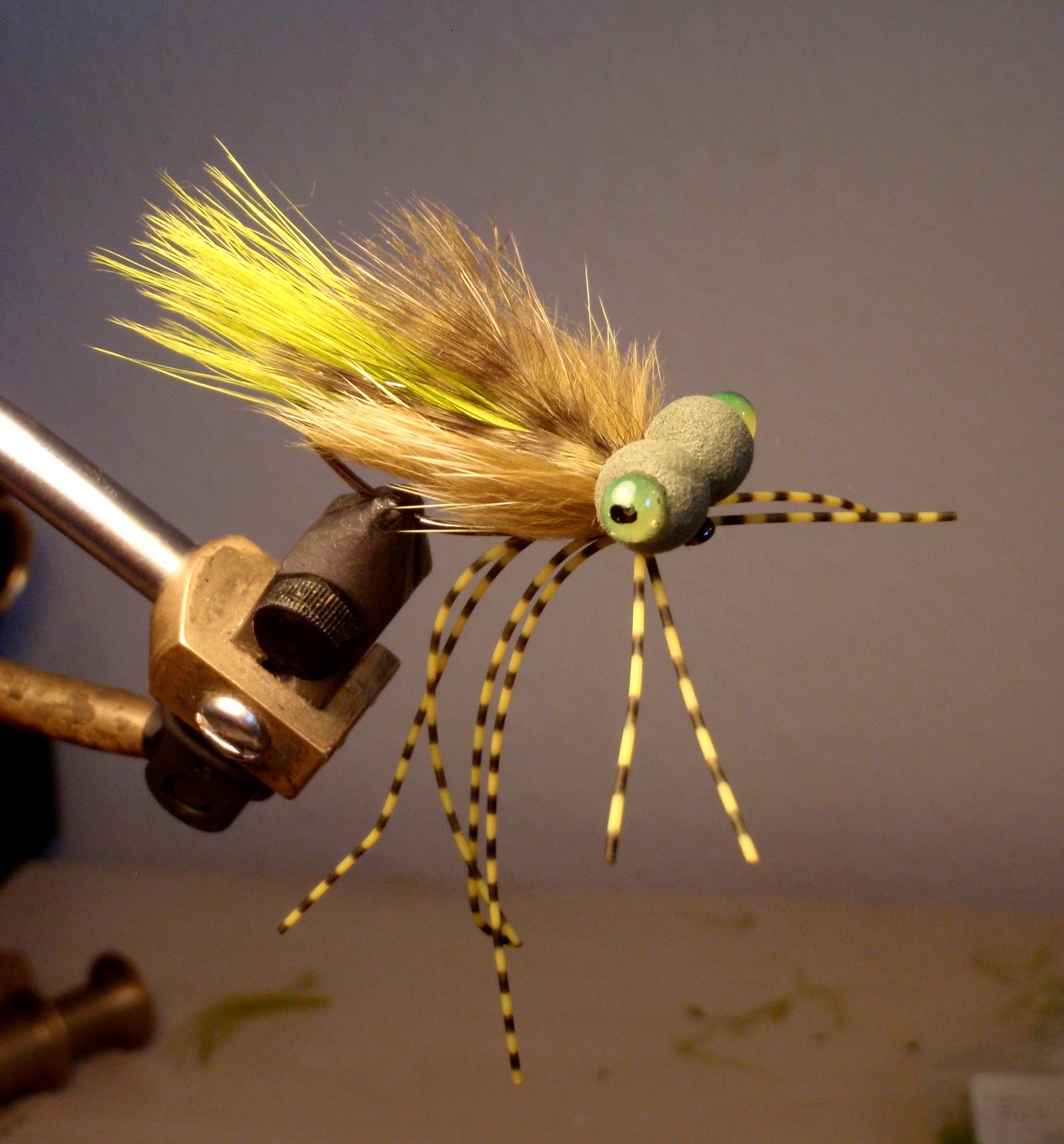
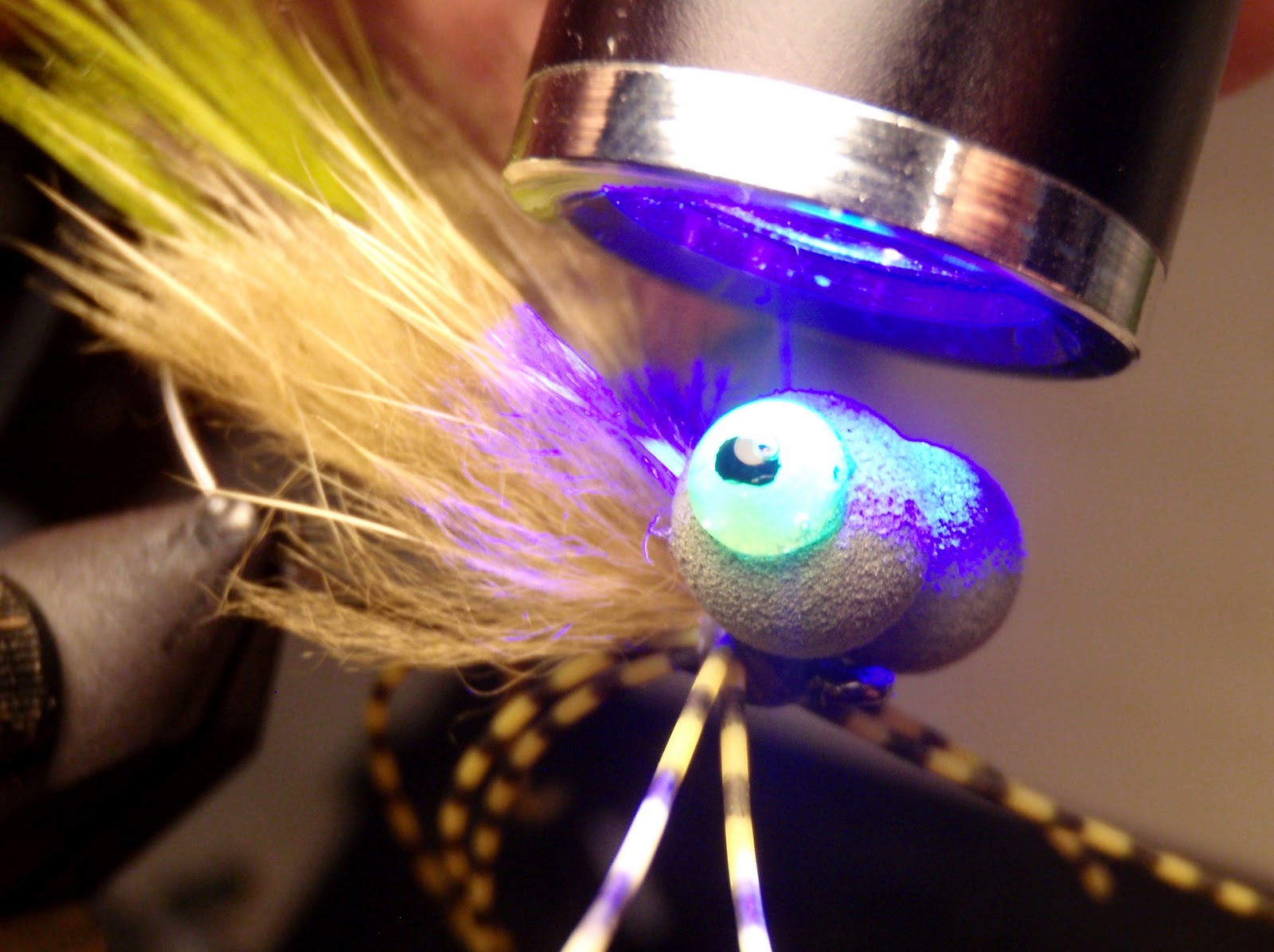
The Booby Frog fly was designed to look, move and float the way a real frog does on a pond, but stay easy to cast with a lighter fly rod and remain completely snag free. Arguably the most common and enjoyable type of top-water bass fly is some sort of cork or spun deer hair popper tied with the general size, shape and color of a frog. These flies have the ability to fool many un-pressured fish, but lack the subtlety and movement to do well on every body of water and in all seasons. Like a real frog, the Booby Frog does not always float…and when it does, it sets in the surface film of the pond at a 45 degree angle with it’s legs splayed out and just the big foam eyes popping out of the water. And the fisherman need only touch the fly line to get the front-facing rubber legs to twitch back—often being just the right trigger for the big bass lurking nearby. This fly has so much great movement and action in the water because the natural materials are not bound to the entire length of the hook shank. The Booby Frog is tied on a large stinger-style hook, but all the materials are tied in at the same 3/16th of an inch of the hook shank directly behind the eye of the hook—this allows the frog body no restrictions in movement. Also, this frog may be the first ever to offer the bass fisherman a top water fly that rides hook point up (almost out of the water!) completely eliminating the need for any cumbersome and distracting hard-mono weed guards that only partially work. The Booby Frog casts easily with a common trout-weight fly rod and crawls easily and seductively over even the thickest weed beds, logs and lily pads.
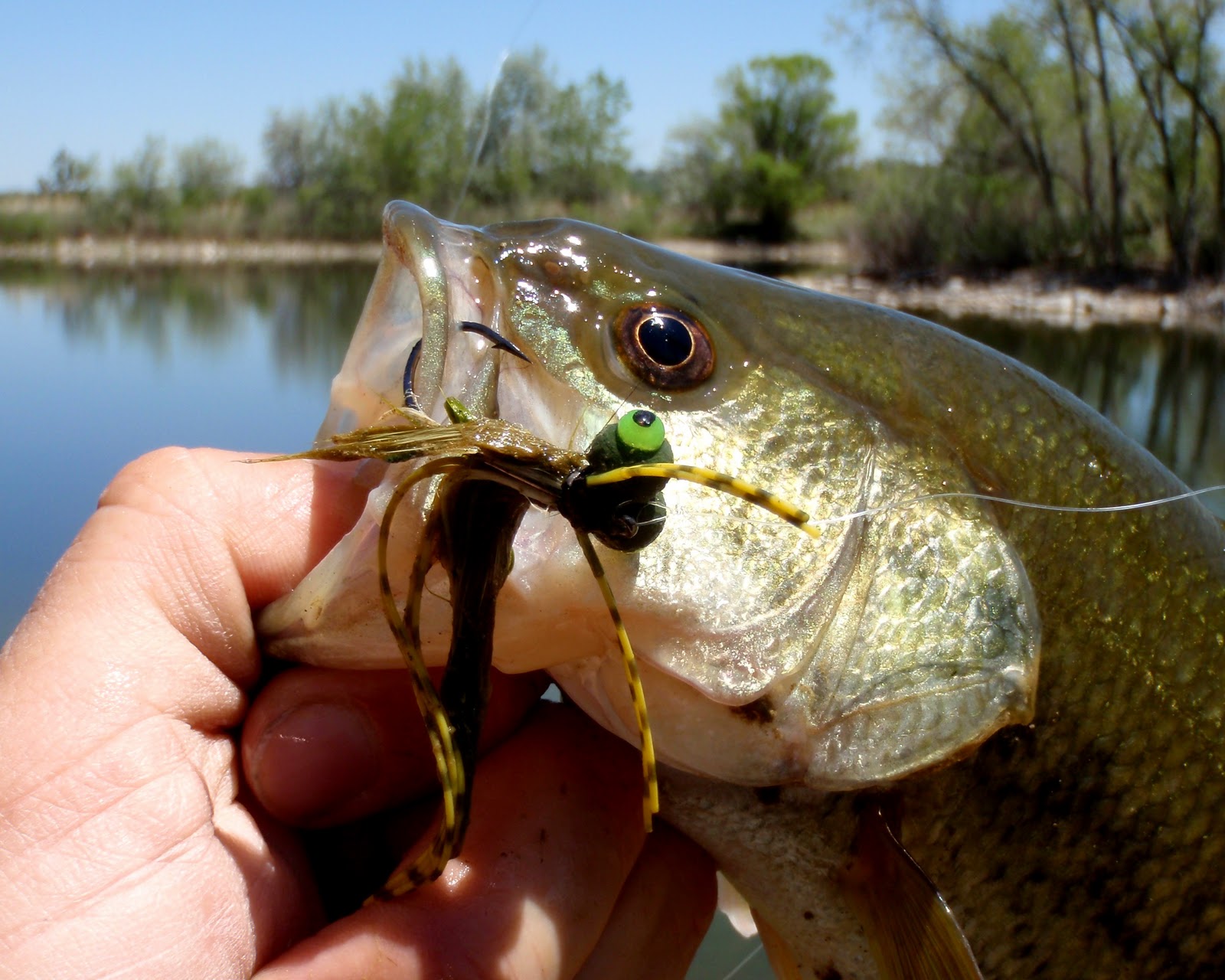
Booby Frog Recipe:
Hook: Gamakatsu B10S Size 2
Thread: Danville
Body Bottom: Marabou (Cream) Wapsi (MB002)
Body Middle: Marabou (Golden Olive) Hareline Dubbin, Inc. (M8BQ159)
Body Sides: Mink (or Squirrel) Zonker Strips (Olive Brown) Wapsi (MKZ089)
Body Top: Grizzly Marabou (Olive) Hareline Dubbin, Inc. (GRIZM263)
Foam Eyes: Rainy’s Olive Foam Boobie Round Eyes X-Large (BE-09144)
Legs: Montana
Hard Eyes 1: Loon Outdoors UV Fly Paint (Yellow)
Hard Eyes 2: Black Sharpie Marker
Hard Eyes 3: Loon Outdoors UV Fly Finish (Clear) (Or UV Knot Sense)
Booby Frog Tying Instructions:

Step 1: Build a 3/16th inch thread base directly behind the eye of a Gamakatsu B10S Size 2 hook using Danville’s 3/0 Waxed Monocord (Dark Gray).
 Step 2: Tie in the Marabou (Cream) so that the tips just touch the inside bend of the hook. Apply some Zap-A-Gap to the trimmed butt sections and wrap the tread around the marabou cluster and force it up at a 45 degree angle from the hook shank—the glue should help hold it in place.
 Step 2: Tie in the Marabou (Cream) so that the tips just touch the inside bend of the hook. Apply some Zap-A-Gap to the trimmed butt sections and wrap the tread around the marabou cluster and force it up at a 45 degree angle from the hook shank—the glue should help hold it in place.


Now go take him fishing!

Tuesday, March 20, 2012
Finesse Worms for Aggressive Early Season Bass
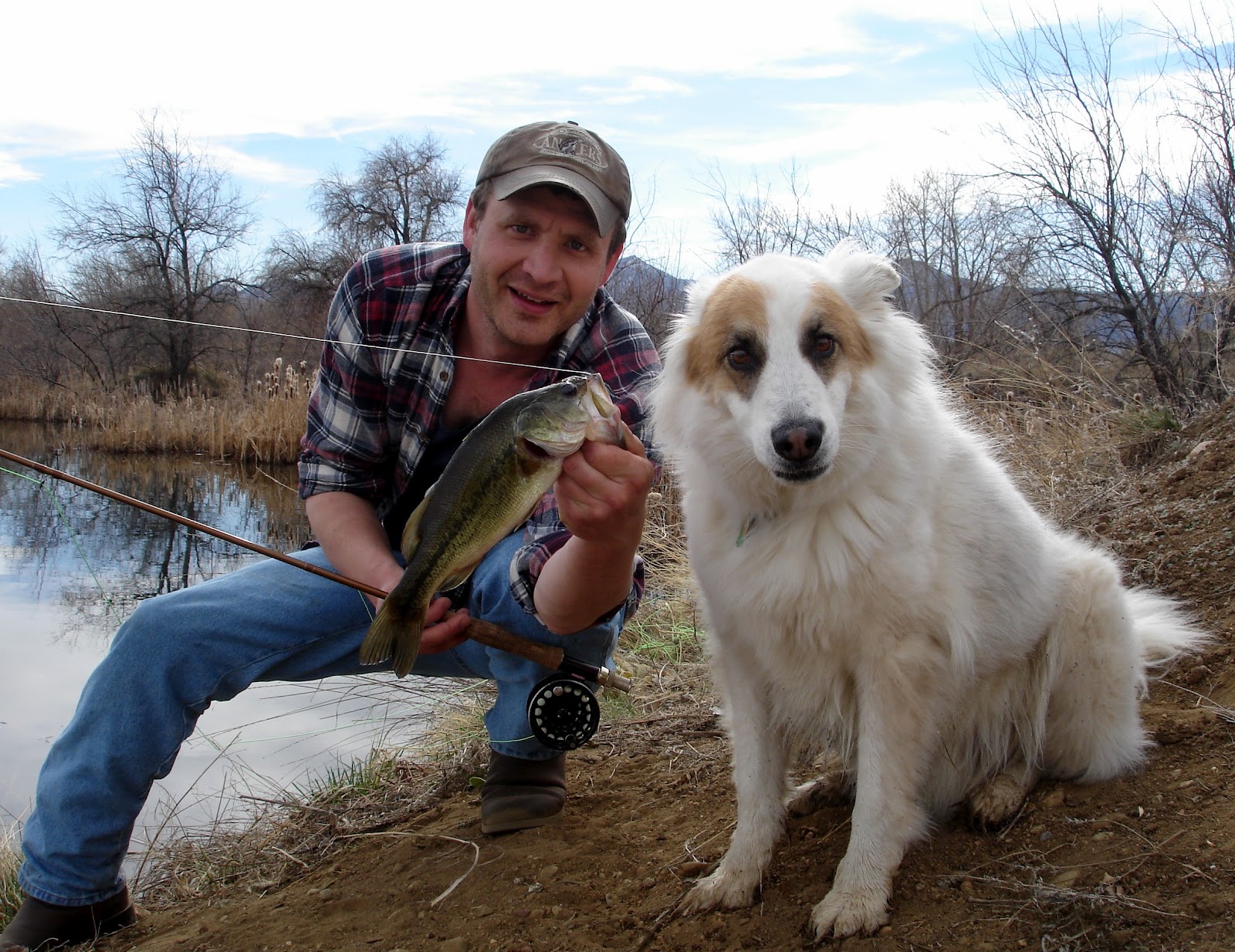
The snow has been sun cleared from the flat lands here in Colorado and the warm-water lakes are turning on. Pack a fast six-weight and some streamers in the car or truck so you can hit a local bass pond on lunch break or after work. The problem with the local-pond reprieve is, unless you know a secret gem or have access to private water, you will have to share your bass with others. This sometimes means you have to approach the situation from a slightly different angle (pun most certainly intended) than every other dude on lunch break. Back in the day—when I was stationed in North Carolina—the conventional lure of choice was a small and straight soft plastic like a mini Slug-Go worm or Bass Assassin jerkbait. We would rig it with no weight and fish it with a series of hard jerks that gave the worm a lively “walk-the-dog” action triggering aggressive strikes from normally tentative and educated bass. The fly rod version of this is a dubbing Finesse Worm. My favorite color combination is a dark olive Simi-Seal dubbing with a hot yellow Ice Dub for the tip. Use a two strand dubbing loop if you are using a 3/0 waxed monocord, or a four strand dubbing loop if you are using a 6/0 thread. This will provide certain rigidity to the finished worm, minimizing fouling tendencies and aiding in the flies ability to stay straight and “glide” farther after every aggressive strip during the retrieve. Make the worm from 3 ¼ to 3 ½ inches long and tie it on a Tiemco 777SP #4 hook. This is the ideal hook because it has a large, straight eye protruding out of a long, straight shank—perfect for jerkbait-type action. Tie an exaggerated thread head on these worms and even go so far as to add some Loon UV fly paint (or Knot Sense) or epoxy to create a tapered cone at the front…also to aid in the darting action. Fish the Finesse Worm on a nine foot 0x leader and use a Rapala knot or some other loop knot that will allow the fly to dart erratically

Friday, March 16, 2012
Boulder Creek Opening Up

Sunday, March 11, 2012
A Lesson from Joan

The best bit of writing advice I have received did not come from my late grandfather—a columnist and failed novelist in Sydney…no, not Nebraska—or my mother, or any high school English teacher, or Stephen King, or Anne Lamott, or even Strunk and White. Nope. Joan Rivers. Ha! Did not see that slider coming at your knees, did you? I don’t know if it was the quality of the advice she gave me, or more the impeccable timing and directness. But…it’s a roundabout story that starts here and ends with catching a big carp. I promise.
So…I do actually fish some during the winter. But I did not this year. I never really look forward to it, by any means…winter fly fishing is generally a miserable and sad sort of affair. Most of us here in Colorado Colorado

That night I sat on the sofa, stoking the fire and stuffing popcorn into my face and watching free television on laptop Hulu…generally feeling and looking like a slug going nowhere. I was catching up on a show written and directed by one of my favorite stand-up comics, Louis C.K. (think contemporary Seinfeld but darker…he has no friends, two kids and never gets laid). This particular episode ends with Louie attempting to commiserate with and make out with fellow comedian, Joan Rivers. The old bird smacks him around a bit and talks some sense into him. He has just walked off a gig in a Trump casino because the crowd wasn’t paying attention and the lounge venue was pretty lame.
“I’m just tired of all the bullshit,” he tells Joan.
She smacks him around some more and points a very crooked and judgmental talon at him and yells. It’s a funny scene, for sure…but sitting there that night, looking and feeling like a pathetic blob with popcorn kernels collecting between belly rolls and couch cushions…I felt like the old bitch was yelling directly at me.
“You don’t quit a job,” she scolds.
It sank into my brain and later that night—while restlessly asleep—Joan kept on…at me alone this time. She yelled at me for being lucky enough to be an actual working writer (about fly fishing, none-the-less!) and turning down a paying gig! What was I thinking? Complaining that the time line was too demanding and it wasn’t my idea anyway…and it’s a “how-to” so…blaaaah. Good grief, man! It’s a paying job!
“What are you?” Joan shrieks in my dream. “A trust fund baby?”
I awoke feeling emotionally cougar-bitten, and brow-beaten. But knew, without any second-guessing or self-doubt…I had to take the job. Say yes. No matter what it was or how difficult it was going to be to have to compromise and work with a real editor again. It would be a long, hard haul…but I had to do it. I am a working writer. This is my job. End of story.

But, of course, it was not the end of the story. I busted my ass for the next one-hundred-thirty-three days straight. In-between customers at the fly shop. After dinner and on weekends. Right through some fantastic late-fall fishing, Thanksgiving, Christmas, the new year, my birthday…never took a day off. Couldn’t. And now it is spring again. March. The snow is melting fast down in the flat land, the carp and bass lakes are thawed and the rainbows are moving toward shallow gravel to spawn. And I have delivered my work…all forty-five-thousand painstakingly cuss-less words, a stack of photos and even some pen-and-ink illustrations…on time and with a smile. Done. I walked back into that dimly-lit lounge, did my bits, didn’t disparage The Donald or his tacky casino…and my ass got paid.
And my first day off in over four months is actually a sunny, nice day with no wind—maybe a better reward than my advance check or seeing my name on the cover of another book. Good weather. And actively feeding carp…!

Thursday, March 8, 2012
Tying The Curmudgeon Crumpler
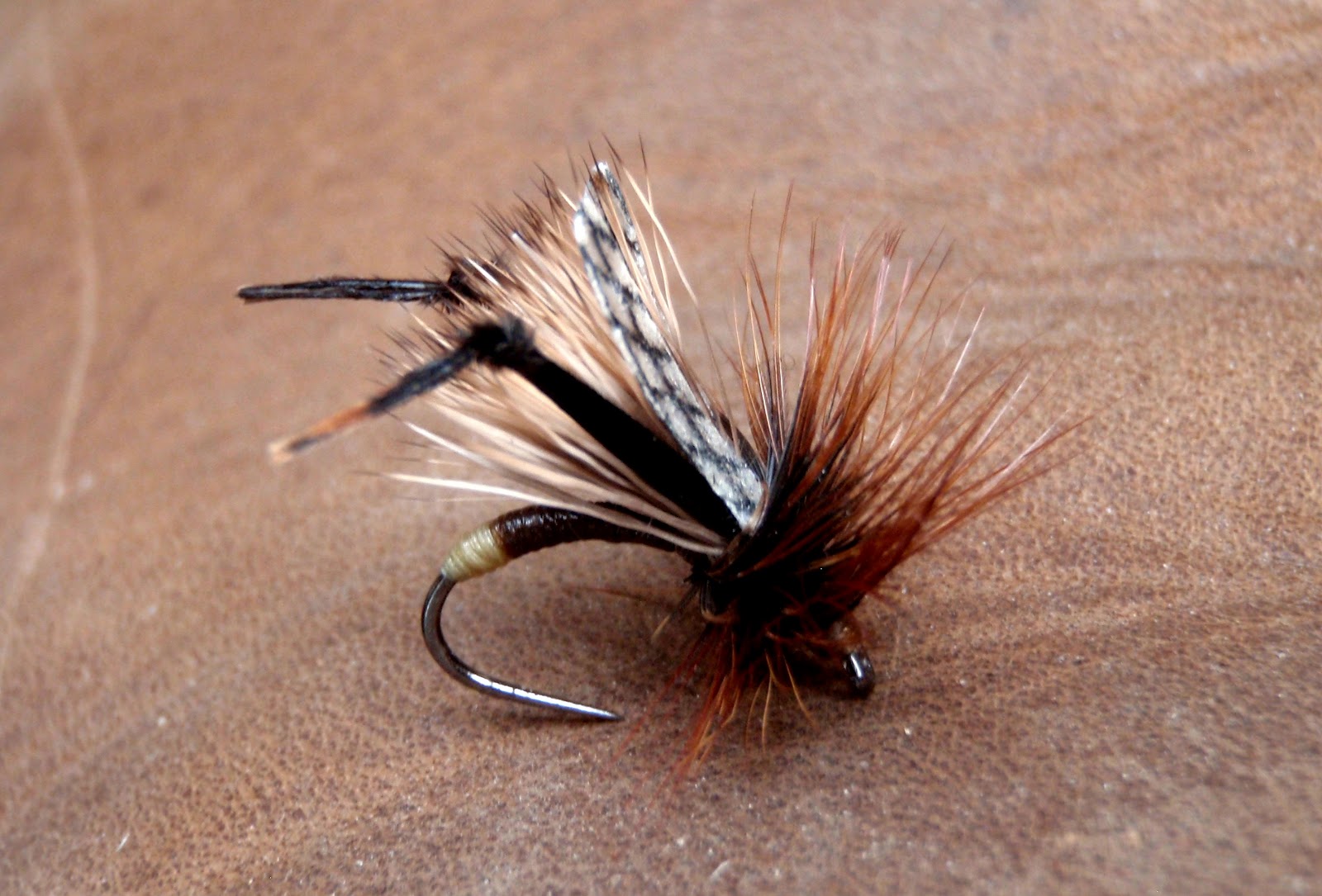


Now tie up a half dozen of these in preparation for the season!

Pattern Created by
Erin Block
Saturday, February 11, 2012
Tip of the Week

If your glasses are back at the truck and some stranger approaches on the river and grunts obscenities at you...think long and hard before engaging the fellow in a fist fight.
Sunday, February 5, 2012
Saturday, February 4, 2012
Tip of the Week

A knowledgeable angler will be sure his trout is balanced properly before heading to the river.
Wednesday, February 1, 2012
Saturday, January 28, 2012

Saturday, January 21, 2012

Saturday, January 14, 2012

Friday, January 13, 2012
Favorite Fly Shop Questions of 2011
Yes...I am still collecting them!
#5 "Do you guys sell any grasshopper emerger flies?"
#4 "Why do you guys sell a snowshoe rabbits foot...for good luck?"
#3 "I'm fixing my septic system. Do you guys rent waders?"
#2 "This yellow humpy fly...is it a caddis with its wings up ready to take off?"
#1 "Do you think he smells my kitty cat?" --said by very large, sweaty woman failing to fend off an English Setter in...let's say, a very aggressive point!#5 "Do you guys sell any grasshopper emerger flies?"
#4 "Why do you guys sell a snowshoe rabbits foot...for good luck?"
#3 "I'm fixing my septic system. Do you guys rent waders?"
#2 "This yellow humpy fly...is it a caddis with its wings up ready to take off?"
Best of: 2009
Saturday, January 7, 2012
Tip of the week

The difference between a good ending to a night of hillbilly bobsledding...and a bad one is, as it turns out, exactly two and a half feet.
Saturday, December 31, 2011
Tip of the Week

Later tonight you may suddenly realize ‘tis mortal men who need fire pokers. STOP…you have had too much rum. Okay…if you insist. Use your non-casting hand, at least…
Tuesday, December 27, 2011
USING DENIER TO STANDARDIZE FLY TYING THREAD

By. Christopher Helm
In the late 1930's, the Chenille Company created the "aught"( 3/0,6/0, 8/0, etc.) system to indicate the size of thread. This was based on a system where the number or "aught" was the base point and as the thread became smaller additional zeros were added indicating that the thread was finer. As an example, a thread with six zeros ( 000000) translated to a 6/0 thread. As other thread distributors were born after the early 1960's, they followed the same system which was assigning a standard that does not provide as accurate a measurement for the fly tier as denier. In 1988, Tom Schmucker of WAPSI Fly, Inc. in Mountain Home, Arkansas introduced a nylon thread simply called 70 UTC and 140 UTC based on denier, which is the method of measuring thread. This is the system that the garment industry uses for thread to sew clothing. Denier is defined as the weight in grams of 9000 meters of nylon, polyester, rayon thread, etc. There is a correlation between denier and breaking strength of nylon and polyester thread, the smaller the denier number the lower pound/ounce breaking strength of the thread. At the present time, about the smallest denier nylon or polyester for fly tying thread is 40, which would be used for tying midges. The one exception to this denier vs. breaking strength rule is that gel spun polyethylene thread is two to three times stronger that nylon or polyester of the same denier. This transition to a denier rating system will take several years to be completed. Danville and Gudebrod are committed to making changes as they order new labels. UNI-Products has already begun the transition.
Subscribe to:
Posts (Atom)