Showing posts with label Largemouth Bass. Show all posts

Monday, July 30, 2012

Persistence (Sometimes it's all you have left)

Persistence can win you fish. But it is just one of the many ingredients. And sometimes it isn't enough. Sometimes you need the right fly, or you need to be there at the right time of day, or the other side of the lake...or you need to cast farther, or get your fly deeper. And sometimes you just need some good luck. But, if all else fails...if none of your best flies are working, you have walked around the lake three times already, tried top water, deep water, slow retrieve, spastic action, lighter leaders, longer leaders...then persistence (otherwise known as stubbornness) is all you have left. Just keep fishing. Keep putting your fly on the water and sooner or later something good might happen.

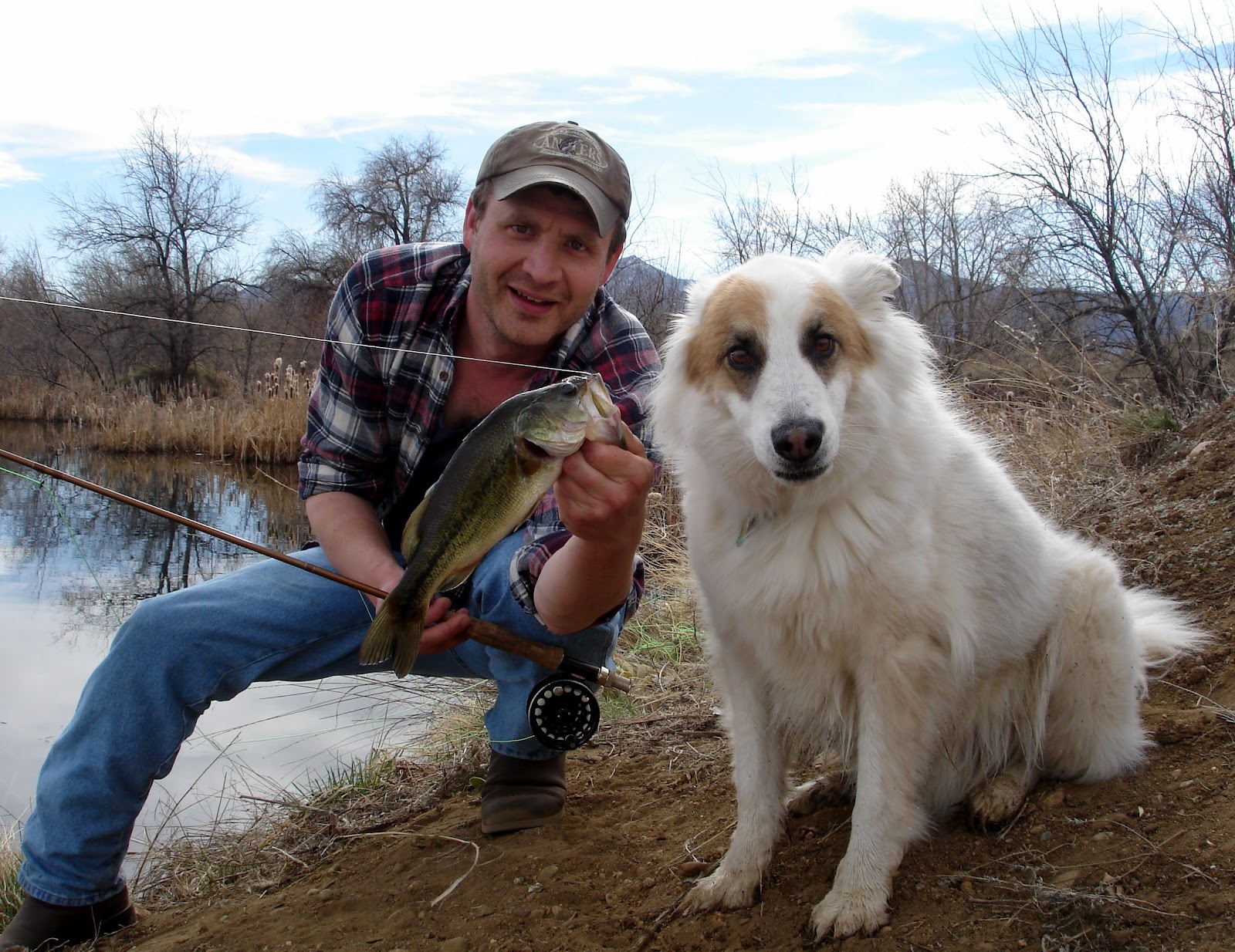
Today I fished with Erin, my buddy Brian and my sister Eva. We were looking for some big bass, but were finding nothing but little bluegill and crappie. Brian was giving some new Umpqua prototypes a thorough test drive, but had to leave early. And my sister and I kept getting distracted by the occasional small carp cruising by, so we spent too much time switching back and forth between Backstabbers and bass flies...  Some of the carp were willing eaters, but we were having no luck with any of the bass. Not even any swipes at our streamers or swirls at our top water frogs.

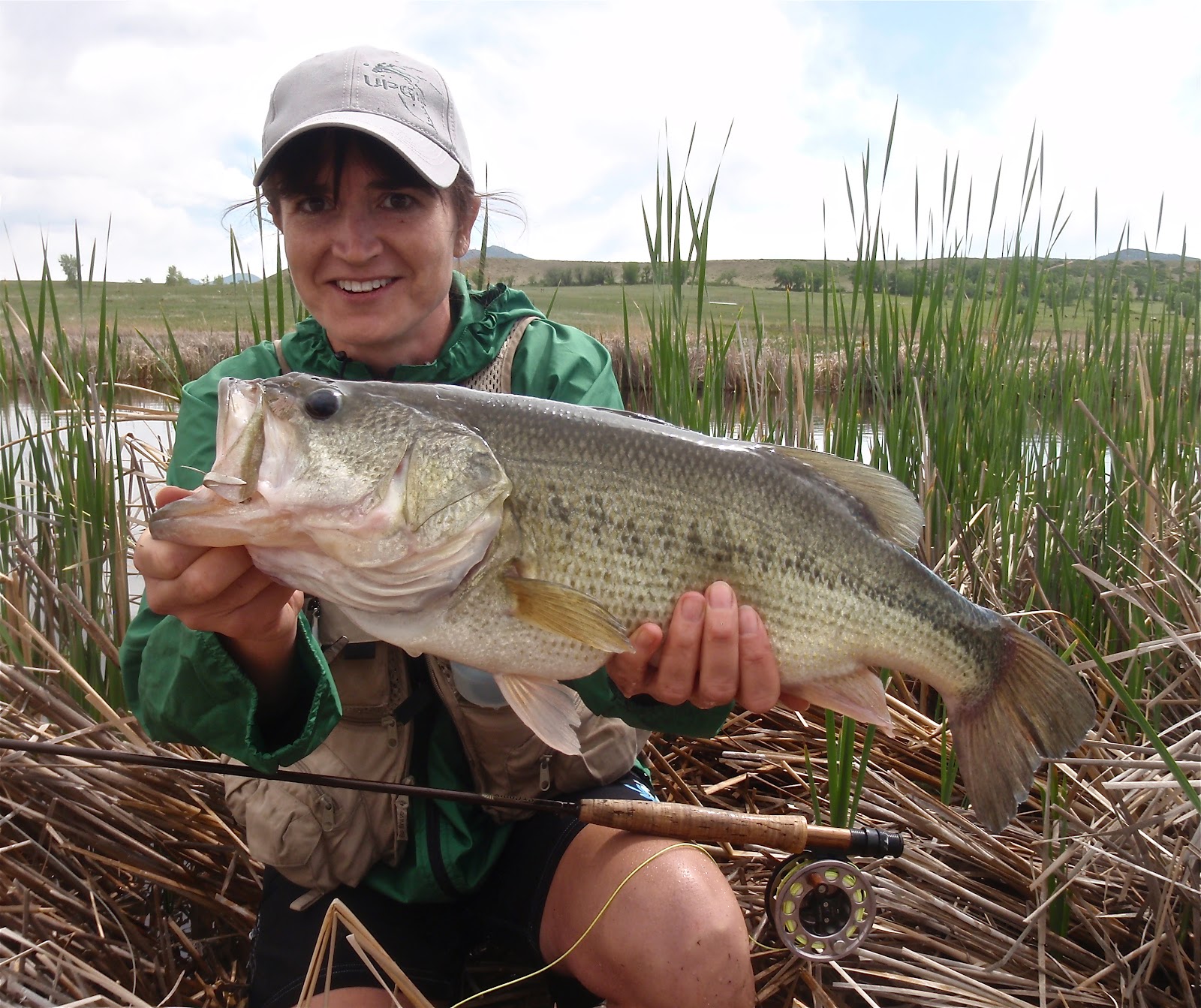
In the end, it was Erin who finally hooked into the bass we were looking for. There were damsels and dragon flies flitting about over the water for most of the day and every now and again one would get tagged by a bass...but usually way out past our casting range. Erin kept working in close near some thick weed beds. And eventually her persistence payed off.

Thursday, June 21, 2012

The Longest Day

This sounds familiar to you because your grandpa made you watch the edited for TV version when you were growing up. It was a 1962 war movie featuring John Wayne, who played the Lt. Col. leading the 2nd Battalion, 505th Parachute Infantry Regiment--arguably the most bad-ass battalion to drop out of the night sky...both then and now. The story centered around the D-Day invasion of the Normandy beaches and was a precursor to, and undoubtedly an influence on the making of the much later Saving Private Ryan. This blog post has nothing to do with that long day in American military history. I thought up the heading of the story because it seemed fitting for a story about taking advantage of the Summer solstice. Yesterday. The longest day of the year. 14 hours, 59 minutes and 19 seconds of daylight. If there was any day to go fishing after work...it would have been yesterday. Given, of course, the assumption that the more time you have the higher the odds are you--as a fisherman--can make something really good happen. No matter who you are or how high-end or crappy your fishing equipment...given enough time you can catch state records and make millions off of tackle endorsements and finally quite that 9 to 5 that kept you locked up in a monkey suit until 6. But on the first day of summer you had almost a full 15 hours of sunshine to cook the local bass ponds to perfection and leave you just enough time to shed the monkey shuck and go fish. Give me my nineteen seconds! I am no different. Sure, I work in a fly shop and I love my job...which sucks, because I can't complain about work to anyone. No one listens. But I spend 53 to 57 hours a week at my dream job. Talking about fishing. Not actually fishing. So, given an opportunity to bail early and fish until it is too dark to tie a knot...I will take it. Which Erin and I did on this fine June solstice. And we fished until we could not see...just to make a point of squeezing out the last drop of summer before it really had a chance to start.

Sunday, May 27, 2012

Big Bass On Small Flies

In the fly shop I preach every day during the summer about using stiff rods and heavy leaders for bass fishing. You can get away with 0x leaders if you tie the streamer on using a loop knot such as the Rapala knot. Because the fly has the ability to jerk or swing back and forth more erratically or naturally than if the fly were tied on with a much lighter leader and a tight clinch knot. You can set the hook proper with a stiff fly rod and have a chance of controlling a big fish with heavy line...even once it gets deep into the cattails. Now, having said all that...sometimes light tippet and small streamers can be the right combination to hook the largest and smartest beast in the lake. Today my sister, Eva took the best fish of the day on 5x and a tiny white Dead Drift Leech tied on a #10 C400BL mini-jig hook. Just to prove my preaching wrong. The fight was intense and in the end she had to dive into the cattails to lip the brute once it wrapped itself deep into cover. Once I arrived on the scene she was dripping wet, hands shaking...but with the wildest carnivore grin I have ever seen on a woman. Good on ya, Eve...

Friday, May 25, 2012

Gift Horses

Never look a gift horse in the mouth, they say. An old saying that suggests you should not assess the value of a gift--or age of a horse--in front of the giver of said gift. So, when a friend and fellow tier who I see in the fly shop a few times a week pulled me aside the other day (a couple weeks ago, actually) and offered up his favorite, secret bass and carp lake...I smiled and was grateful. But I knew the area he was telling me about and was more than slightly skeptical. This particular animal seemed a bit long in the tooth, let us say. My friend was gifting me his secret because I have helped him out over the years with both fly tying and fishing (or so he claimed) and was eager to return the favor with something more substantial and permanent than a luke-warm case of Miller High Life. But he made me promise to protect the secret...before I had even fished it, so there was at least a little bit of curiosity and anticipation. It could be a good horse. Maybe?

The chance came last Monday to "go see a man about..." oh, I'm getting tired of this analogy already. My sister is in town and was eager to get out and have a crack at some fish a tad larger than the small brown trout we have been catching since she arrived. So her, Erin and I drove out to find this lake. Very loose directions. No map. But we found it and it looked good. Real good. Unmolested and lots of fun-looking structure and shoreline. Erin broke away from the narrow gravel path and headed directly toward the shallow end. I heard her say, "I like this place already." And on the second cast she was fast into a six-pound carp...rod bent and giggling. A few moments later I had a fish pick up a four-inch Texas Ringworm streamer and race off with it as I was waiting for the fly to sink. Needless to say, by the time I reared back on the reigns the fish was not there. Felt like a very big bass, though. Wow. Twenty yards down the bank I have another good fish inhale the Ringworm and this time I'm paying attention and set the hook. What happens next can best be described as Chris Farley attempting Chippendale tryouts. A largemouth bass far too fat for acrobatics attempting somersaults on the stage that is the surface of the lake. Comical, yet frighting.

We land several more big bass as well as crappie, green sunfish, bluegill and yellow perch before the three of us call it a day and head for the barn. (Wow...this analogy just won't die.) So, thanks for the gift, brother. You know who you are and now know where we were. Thanks.

Monday, March 26, 2012

Introducing The Booby Frog (Top-Water Bass Fly)

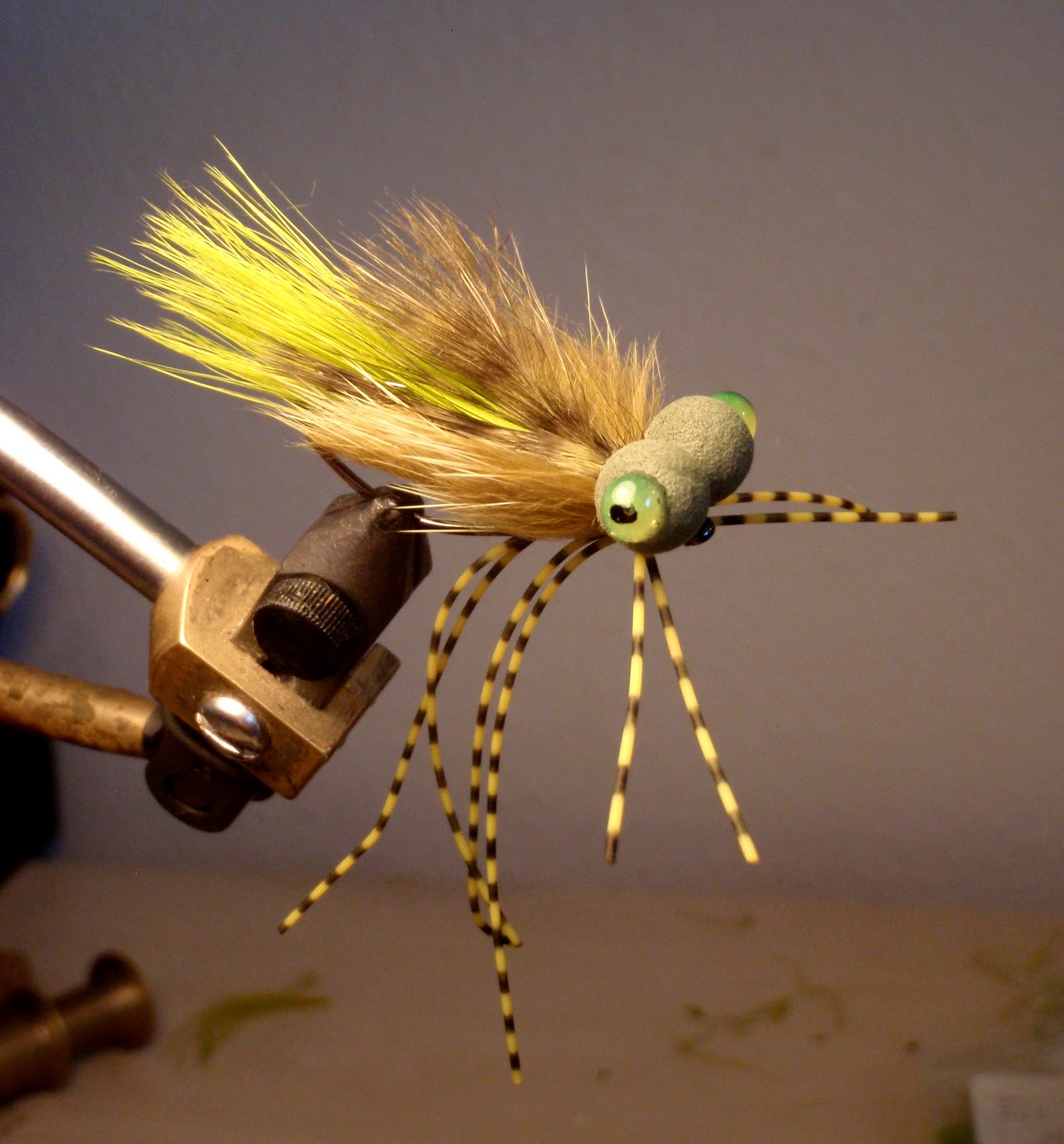
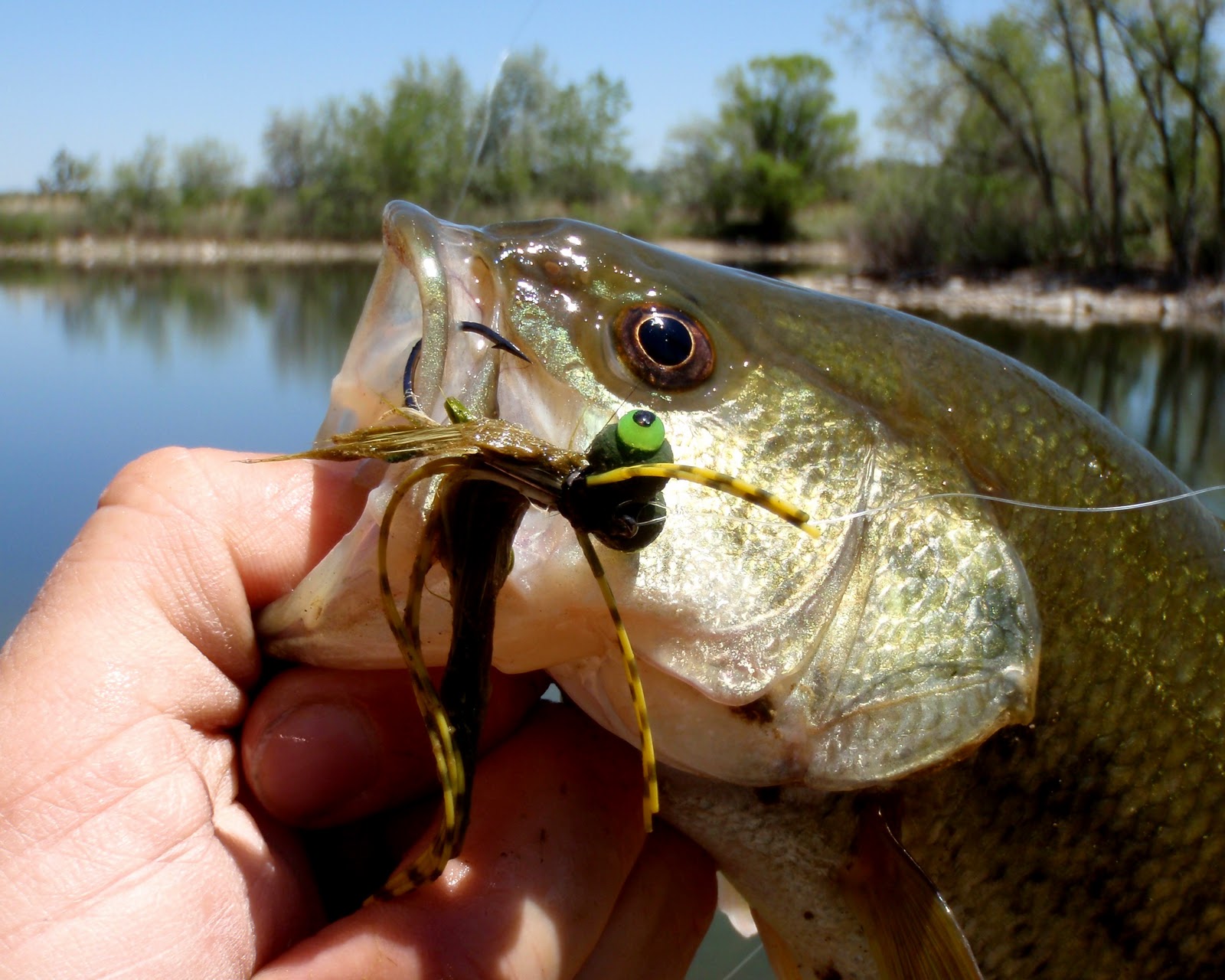
The Booby Frog fly was designed to look, move and float the way a real frog does on a pond, but stay easy to cast with a lighter fly rod and remain completely snag free. Arguably the most common and enjoyable type of top-water bass fly is some sort of cork or spun deer hair popper tied with the general size, shape and color of a frog. These flies have the ability to fool many un-pressured fish, but lack the subtlety and movement to do well on every body of water and in all seasons. Like a real frog, the Booby Frog does not always float…and when it does, it sets in the surface film of the pond at a 45 degree angle with it’s legs splayed out and just the big foam eyes popping out of the water. And the fisherman need only touch the fly line to get the front-facing rubber legs to twitch back—often being just the right trigger for the big bass lurking nearby. This fly has so much great movement and action in the water because the natural materials are not bound to the entire length of the hook shank. The Booby Frog is tied on a large stinger-style hook, but all the materials are tied in at the same 3/16th of an inch of the hook shank directly behind the eye of the hook—this allows the frog body no restrictions in movement. Also, this frog may be the first ever to offer the bass fisherman a top water fly that rides hook point up (almost out of the water!) completely eliminating the need for any cumbersome and distracting hard-mono weed guards that only partially work. The Booby Frog casts easily with a common trout-weight fly rod and crawls easily and seductively over even the thickest weed beds, logs and lily pads.


Booby Frog Recipe:

Hook: Gamakatsu B10S Size 2
Thread: Danville’s 3/0 Waxed Monocord (Dark Gray)
Body Bottom: Marabou (Cream) Wapsi (MB002)
Body Middle: Marabou (Golden Olive) Hareline Dubbin, Inc. (M8BQ159)
Body Sides: Mink (or Squirrel) Zonker Strips (Olive Brown) Wapsi (MKZ089)
Body Top: Grizzly Marabou (Olive) Hareline Dubbin, Inc. (GRIZM263)
Foam Eyes: Rainy’s Olive Foam Boobie Round Eyes X-Large (BE-09144)
Legs: Montana Fly Centipede Legs (Speckled Yellow Medium) (0-5-125-807-2)
Hard Eyes 1: Loon Outdoors UV Fly Paint (Yellow)
Hard Eyes 2: Black Sharpie Marker
Hard Eyes 3: Loon Outdoors UV Fly Finish (Clear) (Or UV Knot Sense)


Booby Frog Tying Instructions:


Step 1: Build a 3/16th inch thread base directly behind the eye of a Gamakatsu B10S Size 2 hook using Danville’s 3/0 Waxed Monocord (Dark Gray).


Step 2: Tie in the Marabou (Cream) so that the tips just touch the inside bend of the hook. Apply some Zap-A-Gap to the trimmed butt sections and wrap the tread around the marabou cluster and force it up at a 45 degree angle from the hook shank—the glue should help hold it in place.

Step 3: Tie in two clumps of Marabou (Golden Olive) on top of the cream marabou. These should extend out well past the cream marabou and 5/8th of an inch past the outside bend of the hook, making the overall length of the fly—without the legs—3 inches. Lick your fingers and slick back the marabou allowing you better control of the material.

Step 4: Tie in a Mink (or Squirrel) Zonker Strip (Olive Brown) to either side of the fly. Trim the leather part of the zonker strip to ½ inch. This should make the overall zonker about 2 inches long. 
Step 5: Tie in two Grizzly Marabou (Olive) feathers on the top of the fly.

Step 6: Mount the Olive X-Large Foam Boobie Round Eyes onto the head of the fly using cross wraps of thread just as you would when mounting a lead dumbbell eye.

Step 7: Flip the fly over and tie in two sets of Medium Speckled Yellow Centipede Legs. Tie them in so that they extend out well past the hook eye and the rear of the fly. Tie off the thread between the foam eyes and the rubber legs using an extended-reach whip finish tool. Trim the front four legs to 1 inch. Trim the rear four legs to 2 inches. Apply a small amount of head cement to the thread built up between the two sets of rubber legs. Be careful not to get any cement on the actual rubber legs, as this will “rot off” the legs over time.

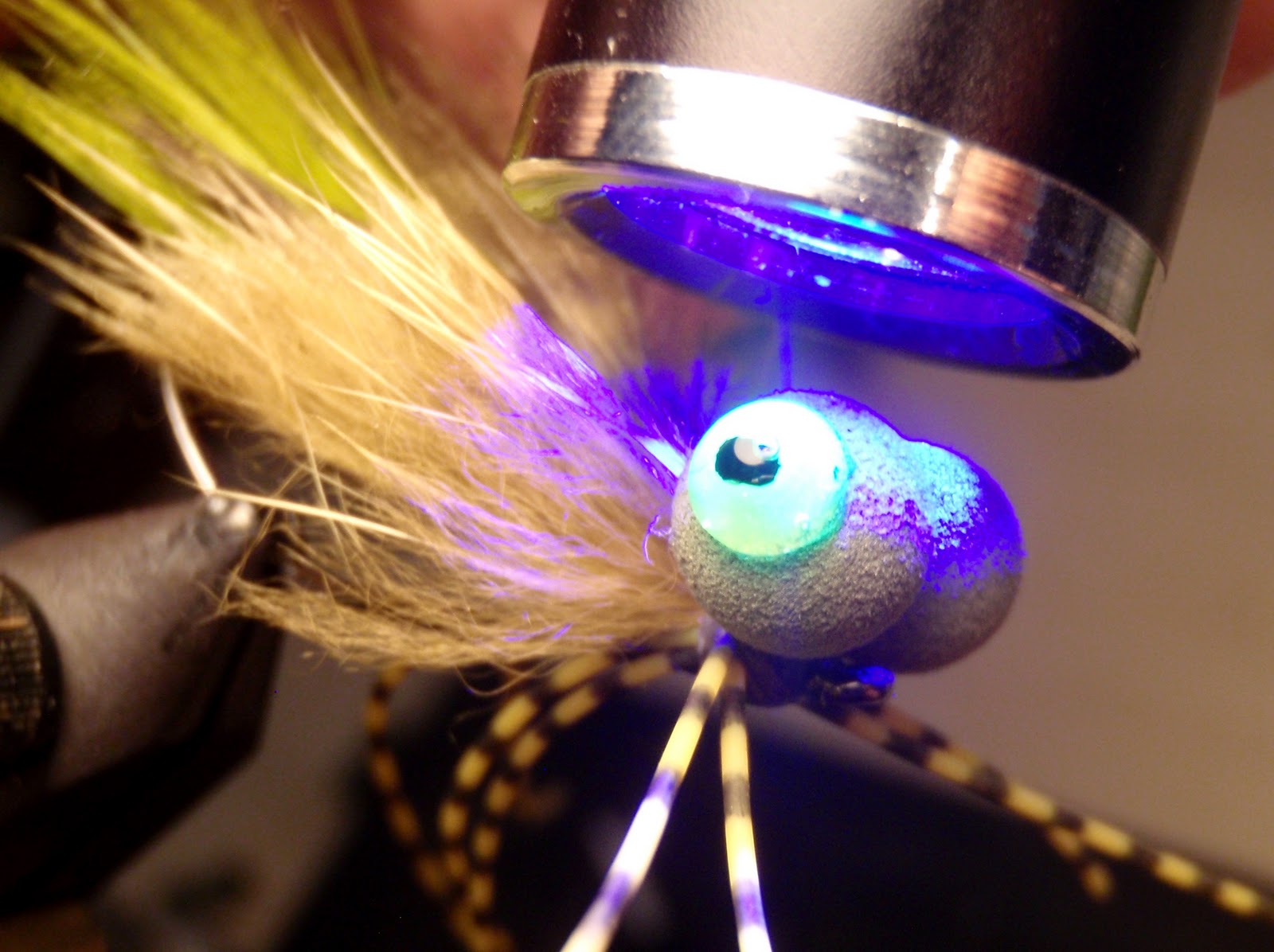
Step 8: Exaggerate the hole that runs through the foam Boobie eye so that the UV Fly Paint can ooze down in and have a better, more durable hold on the foam once cured. I prefer the butt end of my whip finish tool because it is already handy.

Step 9: Apply a small drop of UV Fly Paint (Yellow) into the opening of the foam eye.

Step 10: Cure the UV Fly Paint with the Loon Outdoors UV Power lamp.

Step 11: Create pupils using a Black Sharpie Marker.

Step 12: Apply a small amount of UV Fly Finish (Clear) (Or UV Knot Sense) over top of the now hardened eye. This ensures the black Sharpie pupil remains permanent.

Step 13: Cure one last time with the Loon Outdoors UV Power lamp. Finish with a final coat of Hard-as-Hull head cement to get a glossy look to the eyes.


Now go take him fishing!

Tuesday, March 20, 2012

Finesse Worms for Aggressive Early Season Bass

The snow has been sun cleared from the flat lands here in Colorado and the warm-water lakes are turning on. Pack a fast six-weight and some streamers in the car or truck so you can hit a local bass pond on lunch break or after work. The problem with the local-pond reprieve is, unless you know a secret gem or have access to private water, you will have to share your bass with others. This sometimes means you have to approach the situation from a slightly different angle (pun most certainly intended) than every other dude on lunch break. Back in the day—when I was stationed in North Carolina—the conventional lure of choice was a small and straight soft plastic like a mini Slug-Go worm or Bass Assassin jerkbait. We would rig it with no weight and fish it with a series of hard jerks that gave the worm a lively “walk-the-dog” action triggering aggressive strikes from normally tentative and educated bass. The fly rod version of this is a dubbing Finesse Worm. My favorite color combination is a dark olive Simi-Seal dubbing with a hot yellow Ice Dub for the tip. Use a two strand dubbing loop if you are using a 3/0 waxed monocord, or a four strand dubbing loop if you are using a 6/0 thread. This will provide certain rigidity to the finished worm, minimizing fouling tendencies and aiding in the flies ability to stay straight and “glide” farther after every aggressive strip during the retrieve. Make the worm from 3 ¼ to 3 ½ inches long and tie it on a Tiemco 777SP #4 hook. This is the ideal hook because it has a large, straight eye protruding out of a long, straight shank—perfect for jerkbait-type action. Tie an exaggerated thread head on these worms and even go so far as to add some Loon UV fly paint (or Knot Sense) or epoxy to create a tapered cone at the front…also to aid in the darting action. Fish the Finesse Worm on a nine foot 0x leader and use a Rapala knot or some other loop knot that will allow the fly to dart erratically

Friday, October 14, 2011

Conventional Wisdom Stumbles into a Room of Fly Tiers

The Geezus Lizard and Texas Ringworm are two bass flies that have finally evened the playing field. They have allowed fly fishermen to dabble into the not-so-secret voodoo world of conventional bass anglers worldwide. Their existence is born from a frustrated desire to turn what I had learned in my youth about bass and bass lures into a viable fly rod option, without loosing the life-like and traditional advantage of a hand-tied fly. Their conception consumed a large part of my adolescent and adult life. As a kid in rural Ohio and Pennsylvania, I grew up with an easy understanding of fish that liked to eat small bugs. I got trout. I understood bluegill, because they had an affinity toward bugs which were an easy size to cast with my noodly fiberglass fly rod. I even felt comfortable with the smallmouth bass in our local rivers…they at least liked to eat little soft-shell crayfish. I could easily tie and cast a slightly weighted brown woolly bugger! But the part of the Mid-West I grew up in was filthy with farms and fields and old barns…and behind every dilapidated old barn or back in every “Back 40” was an equally neglected farm pond full of largemouth bass! I would catch them easily on sparse bucktail streamers and small cork poppers, but the ones that ate were always the young ones…the one and two pound farm-ponders that were still small enough to get excited about a juvenile crayfish or crippled damsel fly. The big bass seldom showed any interest in my flies. To my great disappointment.

I joined the Army and left Ohio when I was eighteen years old. During the years that followed I spend a large amount of my time in training or deployed overseas, but was stationed at Fort Bragg, North Carolina were I was introduced to Southern Bass and a much more technical and refined way of fishing. And it wasn’t fly fishing. I learned about the Pig-n-Jig, the Zarra Spook and the weedless rubber worm…both Texas rigged and Carolina rigged. It was a bass-fishing rebirth for me! I found many largemouth bass…and large ones! But, when I got out of the service (the life of an infantry paratrooper is not kind on the body!) I hung up my spinning rods in favor of, once again, the fly rod. Since then I have lived and guided throughout Alaska and the Rocky Mountain West…chasing salmon and trout, but never ignoring my original love of the warmwater species. I would still sniff out a hidden bass pond any chance I got, regardless of the magnitude of the hatches on any local trout streams. And every season my flies would come closer and closer to matching the deadliness of those jigs and worms I used all those years ago.

The Geezus Lizard The creation of the Geezus Lizard hinged entirely on the conception of the ferruled dubbing loop tail. I have tried for years to build a worm-like fly, or fly appendage, to mimic the rubber worms conventional bass anglers have in their arsenal. The long, narrow look of a worm undulating and jerking near the bottom of a pond or lake is well known for triggering big bass strikes…conventional bass fishermen have know this for decades, one of the reasons long, soft plastics are one of the most frequently used lures. I tried chenille, rabbit strips and a whole assortment of other tying materials…but the end result always looked like a bag of chopped assholes leaked onto my tying desk. Once I grasped the concept of ferruling a long dubbing loop, it all fell into place. I used durable thread and dubbing wax and some real nice, long fibered dubbing that I could rake out. Then I sexed it up a bit by using two separate colors on either end of the dubbing loop, giving the worm a segmented look. The yellow tip on the tail was a nod to all the old “Mister Twister” tails on the jigs and soft baits. The rest of the Geezus Lizard is modeled after conventional lures like the Pig-n-Jig, only using crosscut rabbit strips and rubber legs. The only slight modifications were the true jig style hook and the wire ribbed scud back on the underneath of the fly. This does two things, it makes the fly look a lot cooler…and, on the practical side, it allows the fly to zip right back down to the mud after it has been jerked by the angler. This gives the Geezus Lizard a very unique action it the water, very closely matching the way a spooked crayfish darts out, then immediately tucks back to the bottom. This action has the same effect on bass as a four inch, wounded bluegill listing to one side and darting about erratically! The bass just have to pounce! I have fished the Geezus Lizard primarily for largemouth bass, but it has been a devastating fly for smallmouth bass, large trout, northern pike and some friends have even used it for reds off the coast of Texas ! It can be fished deep and slow, or fast and shallow…in rivers or stillwater!

Texas Ringworm This fly was designed for one simple purpose…to completely revolutionize the way we fly fish for bass in this country. To put fly fisherman on the same playing field as every conventional gear bass fisherman from southern California to the famous lakes in Florida. Every warm water fly tier has claimed to invent a fly that is the equivalent to the Texas-rigged rubber worm (one of the most commonly and effectively used tricks in conventional bass fishing). But almost all of them are no more than a ratty piece of chenille with some misshapen piece of rabbit hide glued to the end of it. But, once I had perfected the ferruled dubbing loop tail of the Geezus Lizard I had a decent “worm” taken care of…all I needed to do was to create an effective internal hook mechanism. This fly is absolutely deadly. I prefer to fish it with floating line when on small bass ponds and on a sink tip fly line when on a river or larger reservoir. The sink tip treats the fly just like a “Carolina rigged” plastic worm. In conventional bass angling the weedless-rigged rubber worm is such a mainstay because it is simple and easy to rig, appears natural and unhindered in the water and—most importantly—seldom fouls or snags. A fly equivalent to this lure is not commercially available. Whereas many hard-core conventional bass fishermen tend to fish larger bodies of water, the vast majority of the weekend worrier warm-water fly fishermen across the country spend their Saturdays not astride a Hunter bass boat on a large reservoir…but behind a neighbors’ barn harassing the farm-pond bass. The major handicap these fledgling fly casters have burdened themselves with (and what will, in the end, keep them forever loyal and tethered to the spinning rod) is a severe lack of proper fly-replacements for their go-to conventional lures and rubber baits. The Texas Ringworm is a simple fly to rig and fish when compared to its rubber-worm contemporaries. The hard-mono loop keeps the large TMC 8089 hook facing up and snag free. It stays in place even through the longest or brutal casting, but detaches immediately once a bass eats and the hook is set. Once the fish has been detached, the hard-mono loop is easily re-attached.

How To Tie The Geezus Lizard

How To Tie The Texas Ringworm

Buy These Flies Online!

Thursday, October 13, 2011

Hatches Fly Tying Magazine


Hatches 2011: Geezus Lizard and Texas Ringworm by Jay Zimmerman
The Geezus Lizard and Texas Ringworm are two bass flies that have finally evened the playing field. They have allowed fly fishermen to dabble into the not-so-secret voodoo world of conventional bass anglers worldwide. Their existence was born of a desire to find a viable fly rod application for lessons I’d learned in youth about [...]


Hatches 2011: Emerging Patterns – Tying the Missing Link by Russ Forney

Hatches 2011: Emerging Patterns – Tying the Missing Link by Russ Forney
For some, a flurry of mayflies hovering over the water is the initial sign of a hatch. In reality, though, insect activity might have been churning frenetically below the water’s surface for many hours before. Emergence begins well before the first dun pops off the water, and so does some of the most productive fishing. [...]


Hatches 2010: A Midwinter Refection on Flies by Bob White

Hatches 2010: A Midwinter Refection on Flies by Bob White
It was my first season in Alaska, and I was one of several new fishing guides that had gathered around the bonfire to unwind, review the day, and listen to Rusty. The old guide was the consummate bush rat, and had forgotten more about living and working in the North Country than many of us [...]


Hatches 2010: Tying the Devil’s Reject by Brent Drew & Alex Cerveniak

Hatches 2010: Tying the Devil’s Reject by Brent Drew & Alex Cerveniak
A deceptive calm fills the air. The river gurgles. A light breeze whispers like a witch’s spell, enticing the angler to take a nap at the water’s edge. But even as he dozes off, he senses that something isn’t quite right. A sixth sense has his subconscious on guard. He glances uneasily over his shoulder [...]


Hatches 2010: Covering the Hendrickson Hatch by Nick Pionessa

Hatches 2010: Covering the Hendrickson Hatch by Nick Pionessa
My mind leafed through the pages of a crumbling paperback to drawings made by a master with whom I was barely familiar. “This must be a Quill Gordon,” I said. “No, I think it’s a Hendrickson.” I remember the day as if it were yesterday because it was my birthday and that Hendrickson was one [...]

Tuesday, October 11, 2011

October Largemouth

Autumn bass ain’t like summer bass. The water levels have all dropped as well as the water temperatures—and the bass metabolism. With the cold snaps and cool nights we have seen an end to the thick beds of aquatic vegetation crawling with bug life…no more crazy summer nights with damsels zipping about every which way and young largemouth popping out of the water after them. No more making love in the green grass behind the stadium—sorry Van Morrison. The cattail’s are more gold than green, the lily pads have died and the grass is brown. But the bass are still there…just not as gung-ho as they were a couple months ago. Cold water hits these fish like a prison sentence or combat tour hits a 19-year-old…kinda sucks out the piss and vinegar. So fish slow and deep and choose your flies accordingly. Pick bass flies that have the best, life-like action even “on the drop” or when crawled painfully slow on the bottom or through the last remaining weed lines. I have been using a black Texas Ringworm on some of my local ponds recently. I use a long, but stout leader (9ft 1x) most times. Tie the fly on using some sort of loop knot, as this greatly increases the back and forth “walk-the-dog” action of the fly…even when fished slow. I tie the Rapala knot because my go-to has always been the clinch (or improved clinch) so making the transition is simple. Look up the two knots online and you will see. The Texas Ringworm is technically an articulated streamer, so the action is borderline schizophrenic and the hook rides up and is buried so the worm is virtually snag free and weedless…so toss it into all the nasty slop!

Wednesday, June 22, 2011

Lucky Man

I have never been a man of means. Unless you consider stubbornness and persistence to be means. (Maybe they are, but you sure as hell can't fold them up and put them in your wallet.) I was not born with a silver spoon in my mouth...it was more of a clunky, metal Coleman camp spoon. And I did not fare well in the classroom scene, so there were no grants or scholarships rewarding my graduation. I didn't even attend my high school graduation. About the time my fellow classmates were being handed their diplomas and flipping their orange and blue tassels from one side of their silly hat to the other...I was being handed an Entrenching Tool and attempting to disassemble (and reassemble) an M16 in the the dark. And then, for most of the years of my civilian life that followed, my blue-collar work ethic and Army-induced sense of loyalty were generally taken advantage of by selfish girlfriends and crooked employers. But I kept on keepin' on. Put in 80 instead of 40. Never settled. Never satisfied. And as they say, within 12 hours the stopped clock is right...the dumb hog gets his nut...and sooner or later the studio apartment full of circus chimps bangs out a best seller on an old typewriter. Things begin to fall into place. I start getting published. My flies begin turning up in more and more fishing reports and fly boxes. And a real fisher-woman falls in love with me. Finally met my Eddy. Yup...things start to happen. But, I have kind of lost track of all the things going on in my life this past year. Too many things. Too many hours. Too busy.

But...three days ago things all slowed down long enough for me to actually focus on what was in front of me. My sister was back around to this side of the globe. Her annual migration. And she got to meet Erin. My Eddy. These sort of meetings can go a multitude of ways...sisters and new girlfriends. Rottweilers showin' teeth and sniffin' ass. We have high standards for the mates of our siblings. New members of the tribe. So there was only one way to do it, I figured...take them to a bass pond and see what transpired. And...well...like Forrest said, peas and carrots! They hit it off. And caught a lot of fish, too. I made a few casts, but mainly just hung around to take photos.

That is about the time it hit me. Standing in warm, waist-deep bass water...swatting mosquitoes, fiddling with the camera...and grinning. Damn I am a lucky man!

Monday, May 16, 2011

Blossoms, Bass & Bellyaches

Mid May…it has not been a long winter here in Colorado, but it sure has been a drawn-out and suppressed spring. Driving to work in the mornings you can look along the road and almost feel summer trying to burst out of the flora like highly compressed acetylene. It is a cool and overcast Sunday…and everything is ready to pop!

The water temperature in most of the old gravel pits is hovering right about 57 degrees. It is cool and the sun is covered in a light grey frosting. The clarity is vodka in an ill-light bar. Baby bluegill scurry at any movement. The bass are lurking…and feeding!

A Bellyache Minnow swims by—wide eyed and scared! Darting, trying so hard to get back to the sanctuary of the newly formed beds of algae. TOO LATE! Ambushed by the hungry bass! Swallowed whole. Devoured. POW! But it was a trick! Straining hard on 3x tippet and limber fly rod…GOTCHA!


Tuesday, April 26, 2011

Private School Bass (Versus Public)

Behaviorally speaking, there are two distinctly different types of largemouth bass: private water bass and public water bass. The private water fishing is as incredibly fun and as insanely easy as anywhere in the country I have ever fished. The public water bass, though, are as finicky and tricky as they get. In our area, the public access lakes that have the potential to hold decent bass populations are very heavily fished. There are size restrictions in place when keeping fish (must be over 15 inches) but this is widely ignored by many of the local bait dunkers. As a consequence; most of the best bass water is severely stressed, and the bass that have been able to remain in these places tend to be much more cautious and worldly than their cousins living on the private side of the tracks.
Much of what you will read about bass fishing is written by those who spend a majority of their time on large reservoirs that are mainly accessible by boat (thus limiting concentrated fishing pressure) or smaller, yet private, leases. As a result, a healthy amount of this written advice does the average local fly fisherman little to no good. When fishing private water you can rig up with a short, stout leader and break loose with all your stereotypical, gaudy top-water poppers and have you a real blast! Public water, on the other hand, often calls for a bit more thought and fineness.
On a large body of water (public or private) bass can be found congregated in certain areas and nearly absent in others. Also, they will migrate from one area to another for a slew of different reasons—time of day, season, water temperature and atmospheric pressure. Because of this, learning a larger bass lake can take years. A fisherman who has gotten to know a body of water can use his accrued knowledge to make decisive and strategic moves; such as leaving a shallow cove where he is catching bass sporadically and moving to some deeper water with submerged structure at the other end of the lake. Once there he may wreak havoc on the bass. This move may involve a 15 to 20 minute boat ride with the outboard motor roaring. If done correctly this kind of trouble shooting can win a guy thousands of dollars in a B.A.S.S tournament. This same scenario on a local bass pond may unfold quite differently.
In many ways small bass ponds are easier to fish than larger lakes. The most noticeable difference is the obvious one: the bass are confined to a small area and can be found with much less effort. The “bass pond” version of the aforementioned strategic boat ride may not involve moving at all, but only mean throwing a cast strait out from the bank and letting the fly sink for a bit instead of casting down the edge of the bank and retrieving the fly quickly.
If all this is reminding you of the fun you had growing up trespassing on golf courses and farm ponds…that’s just great. If it all sounds as daunting as hell, don’t sweat it, I’ll get you thinking like a bass in no time!

Wednesday, March 23, 2011

Deep & Slow (for bass)

March is such a tease. The weather is so nice and the clothing so scant (college town) it has you convinced it is almost summer already. You start having silly notions about taking your shirt off outside (impromptu gun show) and digging to the bottom of your pack for that top-water frog you tied last year, but haven't seen in six months. Then you put you hand in the water and come crashing back to reality. It ain’t summer yet! Not even close. The water is cooooooold, boy! Wooooweee! The bass are living in it…and they’re cold blooded. So, they are moving a bit slow. Their food is lethargic, as well, so keep your leaders long, your casts out toward deep water and let the fly sink. Your retrieve should be painfully slow…test the limits of you’re A.D.D. It may also be a good idea to keep your flies small and dark for the early season bass. I have good luckcrawling a #6 Black Leech Backstabber this time of year. The hook point on this fly rides point up, so you can get away with fishing it slow on the bottom without fear of hanging it up on rocks and roots…

Thursday, March 10, 2011

Just Get Out and Fish!

You look longingly out the window of your office...and can feel the warmth of the sun. Your behind the BFI dumpster smoke breaks are lasting longer (gone are the frantic 3-puffers "shit it's cold!"). And you almost drove into the median this morning as you were trying to peer over the guard rail as you were traveling down the highway at 65mph. Yes...there was a kid fishing that pond along the highway that you still have no idea who owns. Or is it public? And, yes, the kid was skipping school. Probably getting a D- in math...gonna make minimum wage for most of his life (or work in a fly shop). But he had a killer day on the bass pond. He most likely felt a bit sorry for you as you drove by, lurching and fidgeting with your silly neck tie.
So, is this you? Yup, thought so. Now stop wandering into your local tackle store or fly shop saying the same dumb shit..."Well gettin' about time, huh?" IT HAS BEEN TIME! Take a day off if you have to. Just get OUTSIDE!

The bass fishing is beginning to get good... The water is still a bit cool in most of our local ponds and lakes, so be sure to stock up on the proper cold water bass flies. Look for flies that will sink fast (bass are holding deep still) and have a ton of good, life-like movement when fished slowly. I like to have some Meat Whistles and Geezus Lizards in my box this time of year. Both are tied on jig hooks, which allows them to ride hook up on the bottom.


Underwater shot of a Geezus Lizard in action!

Wednesday, February 16, 2011

The Conception of the Geezus Lizard

The creation of the Geezus Lizard hinged entirely on the conception of the ferruled dubbing loop tail. I have tried for years to build a worm-like fly, or fly appendage, to mimic the rubber worms conventional bass anglers have in their arsenal. The long, narrow look of a worm undulating and jerking near the bottom of a pond or lake is well known for triggering big bass strikes…conventional bass fishermen have know this for decades, one of the reasons long, soft plastics are one of the most frequently used lures. I tried chenille, rabbit strips and a whole assortment of other tying materials…but the end result always looked like a bag of chopped assholes leaked onto my tying desk.
Once I grasped the concept of ferruling a long dubbing loop, it all fell into place. I used durable thread and dubbing wax and some real nice, long fibered dubbing that I could rake out. Then I sexed it up a bit by using two separate colors on either end of the dubbing loop, giving the worm a segmented look. The yellow tip on the tail was a nod to all the old “Mister Twister” tails on the jigs and soft baits I fished to smallmouth bass as a kid in Ohio .
The rest of the Geezus Lizard is modeled after bass flies I have tied and fished all my life. Simple, “pig-n-jig” type stuff using crosscut rabbit strips and rubber legs. The only slight modifications were the true jig style hook and the wire ribbed scud back on the underneath of the fly. This does two things, it makes the fly look a lot cooler…and, on the practical side, it allows the fly to zip right back down to the mud after it has been jerked by the angler. This gives the Geezus Lizard a very unique action it the water, very closely matching the way a spooked crayfish darts out, then immediately tucks back to the bottom. This action has the same effect on bass as a two inch, wounded bluegill listing to one side and darting about erratically! The bass just have to pounce!
I have fished the Geezus Lizard primarily for largemouth bass, but it has been a devastating fly for smallmouth bass, large trout, northern pike and some friends have even used it for reds off the coast of Texas ! It can be fished deep and slow, or fast and shallow…in rivers or stillwater!

Monday, October 11, 2010

Dead Fish Do Tell Tales

I heard it said once that you don’t really know a trout stream (even if it is the home water that you have fished forever) until you have volunteered with an electro-shock fish survey. The state division of wildlife will occasionally do these surveys to get an idea of the health of a particular body of water. The electrodes can be stuck deep under even the most cavernous undercut banks. The trout come belly-up…and the volunteers scoop them up in nets. Once the fish are measured and counted they are released unharmed. A bit punch drunk, maybe. The point being…as a volunteer you get years of unanswered questions answered. You will be shocked (pun certainty intended) and maybe a bit humbled to know just how many trout were in your favorite pools. And just how big the biggest trout really is…not that one fat 16 incher like you once thought. You might feel silly when a 22 inch brown trout floats out from under that root ball that you never put a fly near because you were too afraid to loose that $3 streamer.

So, if you ever get the chance to volunteer for one of these endeavors, don’t pass it up. But, these opportunities don’t crop up very often. You usually have to conduct your own reconnaissance. The actual act of landing fish is the best way to determine what size and/or sort of fish live in any given area, of course…but often the fish you catch are just the dumb ones. Sometimes you have to rely on old age or winter kill before the largest or smartest fish show themselves. Always stop and inspect the rotting carcasses. The most decomposed ones really test your species identification skills, but can be fun. Pretend you are on one of those CSI television shows. “Something smells fishy, Grisham. I suspect foul play…yuk…yuk…yuk…”

I have discovered some very interesting things about my local waters by taking a closer look. Sometimes it is simply a matter of not being aware of how big some of the bass are in a certain lake, other times it is discovering that there are big wiper or walleye in a little reservoir that no one in their right minds would suspect. Mmmm…juicy little secrets!